

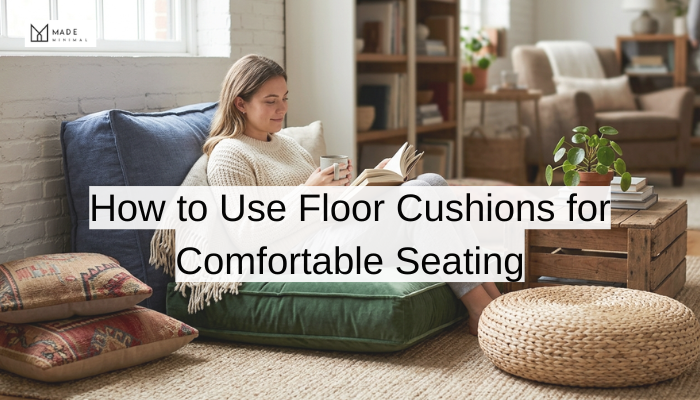
Floor cushions work best when you match the right size, thickness, and placement to how you actually sit. Honestly, a cushion that suits a 20-minute meditation session feels very different from one you want to lounge on while watching TV.
The good thing is that floor cushions are one of the most flexible seating options you can bring into an Australian home. They save space, cost far less than a second couch, and work across almost every room.
At Made Minimal, we stock Japanese floor cushions and tatami mats built for real everyday use, so we know what holds up. In this guide, we cover what makes a floor sitting cushion comfortable, how to use floor cushions in every room, and how to pick the right size and thickness for your space.
Read on to find out.
What Makes a Good Floor Sitting Cushion
A good floor sitting cushion needs at least 10cm of supportive fill, a stable flat base, and a material that holds its shape through regular use.
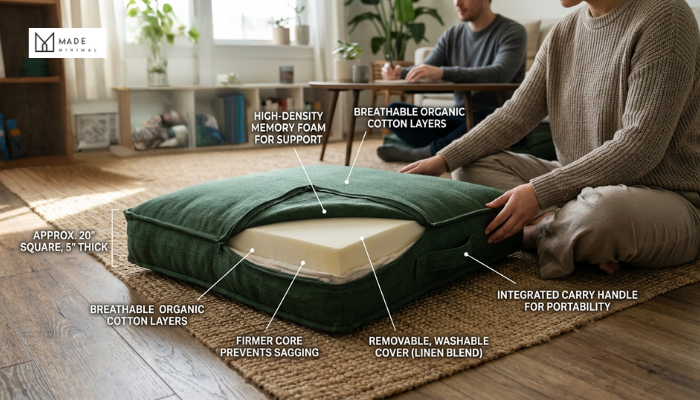
You might be wondering whether a thinner cushion will do the job. It can, for short sits. But if you plan to spend more than 20 minutes on the floor, thickness is the first thing that you should consider. Because cushions under 5cm compress quickly under body weight, and once the fill flattens, your hips and knees take the pressure instead.
The filling type makes just as much difference as the thickness. Memory foam holds a cushion’s shape well and suits casual daily use, which makes it a solid starting point for most homes. Buckwheat hulls take that a step further by shifting to match your body while staying firm over time. Cheaper synthetic fills, on the other hand, tend to break down within weeks, so that tradeoff is worth keeping in mind before you purchase.
Beyond filling, the cover fabric affects how long a floor cushion lasts. Cotton and linen breathe well, especially through Australian summers. They also handle cleaning better than synthetic covers, which tend to pill and fade.
Frankly, the zabuton cushions that have stood the test of time across Japan are built with quality materials and proper firmness from the start. That foundation is what separates a cushion you forget about from one you reach for every day.
How to Use Floor Cushions in Every Room
Use floor cushions to create low-profile seating around coffee tables, reading nooks, meditation corners, and kids’ play areas. After all, they work across almost any room in the house and cost a fraction of what a second couch would set you back. You can start with a zabuton or futon-style cushion in the living room, then see how quickly the idea spreads to other spaces.
Here is a room-by-room breakdown of how to set them up well.
Low Coffee Table and TV Lounging
Place a floor pillow roughly 60 to 90cm from the screen for a comfortable viewing angle that keeps your neck relaxed. Sitting that close to the floor changes the whole feel of the room because it feels more open, more laid-back, and a little like you have gained an extra room without moving a single wall.
On top of that, lying a tatami mat underneath your cushion pulls the whole setup together. It defines the seating area, protects the bare floor beneath, and gives the space a visual boundary that makes it feel intentional rather than thrown together.
From there, the zabuton handles the actual sitting comfort. And if you are on the taller side or you tend to lose track of time in front of the TV, the 55x55cm size gives you enough surface area to shift positions without losing support halfway through the second episode.
Meditation, Yoga, and Quiet Spaces
For a meditation or yoga setup, zabuton cushions have been part of Japanese practice for over a thousand years for good reason. They keep you grounded and comfortable at the same time, which is what seated meditation and light yoga require.
Beyond comfort, these floor cushions offer a firm, flat base that supports proper posture during seated positions. Health experts at CNN note that sitting cross-legged on the floor helps maintain the natural curvature of the spine and supports better posture over time.
Pairing a zabuton with a zafu takes that further by lifting your hips above your knees, which reduces strain on your lower back and helps your spine stack naturally. This combination draws from the same Japanese art of mindful sitting that shaped the meditation spaces of Kyoto, the ancient capital where floor-based practice became part of daily life.
Useful Tip: Tuck your cushion against a wall or in a corner to create a defined, distraction-free zone. That small boundary signals to your brain that this spot is for stillness, not scrolling.
Kids Study and Play Areas
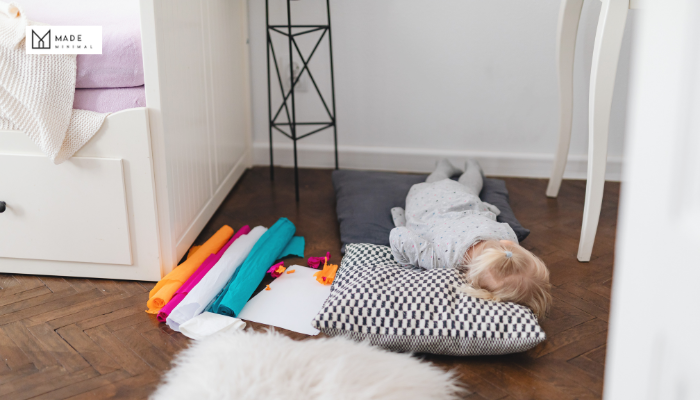
A low table with a floor cushion on each side is one of the simplest setups you can put together for kids. The setup keeps them at a natural height for drawing, reading, or working through homework, without the restlessness that comes from chairs that do not quite fit.
Through our experience with families who shop at Made Minimal, the details that come up most often are cleaning and colour. Floor cushions wipe down easily with a damp cloth, which is a real consideration for households with young children. On top of that, the range of colour options means kids can choose something that feels like their own space, without any permanent changes to the room.
How to Choose the Right Size and Thickness
The right size depends on how you sit, and the right thickness depends on how long you plan to sit. Get both wrong, and even the best-looking cushion will let you down within weeks.
If you are shopping online and feeling overwhelmed by the options, this breakdown makes the decision simple:
| 42x42cm (5cm thick) | 55x55cm (10cm thick) | |
| Best for | Casual, short sits | Extended sitting, meditation, lounging |
| Who it suits | Average frames, compact spaces | Taller adults, larger frames |
| Filling | Standard foam | Memory foam, buckwheat hulls |
| Floor protection | Light | Full, pairs well with a tatami mat |
| Storage | Folds flat easily | Slightly bulkier but still easy |
Beyond size and filling, covers and colour factor into long-term satisfaction too. Cotton and linen designs handle cleaning well, fold flat for storage, and come in a wide range of shapes and styles. Alternatively, futon-style floor cushions with removable covers handle machine washing without losing their shape, which adds to their longevity.
That’s why at Made Minimal, our zabuton cushions come in both sizes, with colour options that fit minimalist and relaxed Australian interiors.
Where to Find Floor Cushions in Australia
Now that you know how to use them and what to look for, the only step left is finding the right cushion for your space. We carry Japanese floor cushions and tatami mats in both sizes, with colour options that suit minimalist and relaxed Australian interiors equally well.
Our Brisbane-based team has helped plenty of customers find the right fit for everything from compact apartments to open-plan living rooms. And with free delivery Australia-wide, ordering online takes the guesswork out of the process.
Browse the full range at Made Minimal and find the style that fits your space perfectly.