

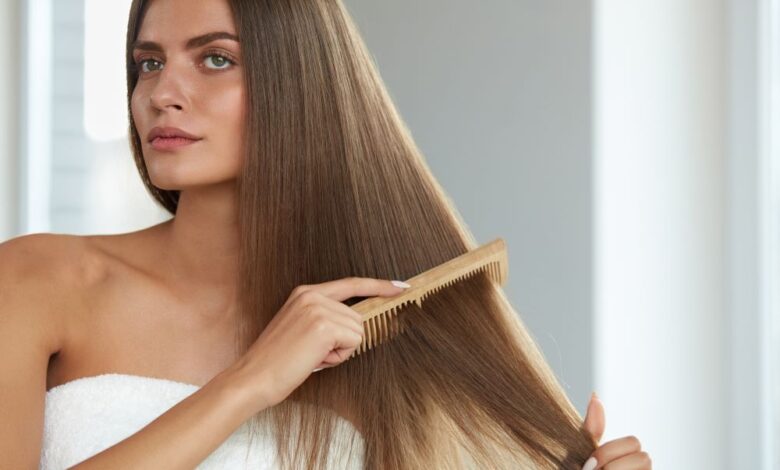
Brushing your hair is often seen as a simple daily habit, but many people wonder if it can actually help with hair growth. You may have heard that brushing stimulates the scalp or encourages thicker hair. While there is some truth behind these ideas, it is important to separate fact from myth. Brushing can support healthier hair, but it is not a direct solution for regrowth.
Does Brushing Your Hair Promote Hair Growth?
The short answer is no, brushing does not directly make your hair grow faster. Hair growth happens at the follicle level beneath the scalp, and brushing only affects the surface of the hair and skin.
However, brushing can still play a supportive role. When done correctly, it helps improve scalp condition, reduce tangles, and minimise breakage. These factors contribute to healthier-looking hair, which can give the appearance of fuller growth over time.
How Brushing Supports a Healthy Scalp
Brushing helps stimulate blood circulation in the scalp, which can support the delivery of nutrients to hair follicles. Better circulation creates a healthier environment for hair, even though it does not directly trigger new growth.
It also helps distribute natural oils from the scalp down to the ends of your hair, keeping strands moisturised and protected. Using a gentle brush for hair growth can enhance this process by providing a more even and comfortable scalp stimulation.
In addition, brushing helps remove loose hairs and minor buildup, contributing to a cleaner scalp environment. A healthy scalp plays an important role in maintaining strong and resilient hair.
Benefits of Brushing Your Hair Properly
When done gently, brushing offers several benefits. It reduces tangles and knots, making hair easier to manage and style. It also smooths the hair cuticle, improving shine and overall appearance.
Regular brushing can reduce breakage by preventing severe knots that lead to snapping. Over time, this supports hair that looks thicker and healthier.
Best Types of Brushes for Hair Health
Boar Bristle Brushes
These help distribute natural oils evenly through the hair, improving shine and smoothness.
Detangling Brushes
Designed to glide through knots without pulling, making them ideal for fragile or fine hair.
Wide-Tooth Combs
Best used on wet hair to minimise breakage when hair is most vulnerable.
How Often Should You Brush Your Hair?
Brushing once or twice a day is usually enough. This helps maintain hair health without causing unnecessary stress.
Overbrushing can lead to damage, especially if done too aggressively. Gentle, consistent brushing is more effective than frequent brushing.
Can Brushing Too Much Cause Hair Loss?
Yes, excessive or rough brushing can cause breakage, split ends, and increased shedding appearance.
It is important to brush gently and avoid pulling, especially when dealing with knots.
Should You Brush Wet or Dry Hair?
Hair is more fragile when wet, so it requires extra care. A wide-tooth comb or detangling brush is best for wet hair.
Regular brushes are better suited for dry hair, where strands are stronger and less prone to breakage.
Common Mistakes to Avoid
One common mistake is brushing too hard or starting at the roots instead of the ends. This creates unnecessary tension and can lead to breakage.
Using the wrong brush type or brushing excessively can also damage hair. A gentle approach is key.
Does Scalp Stimulation Help Hair Growth?
Scalp stimulation can support circulation and create better conditions for healthy hair growth. While this may contribute to overall hair health, it is not a direct solution for regrowth.
How Brushing Fits into a Hair Growth Routine
Brushing works best as part of a complete routine that includes proper cleansing, conditioning, and targeted treatments like Minoxidil.
When combined with other habits, it can help support stronger, healthier hair.
Final Word
Brushing your hair does not directly promote hair growth, but it does support scalp health and reduce breakage. When done properly, it contributes to healthier, fuller-looking hair over time.
The key is to be gentle, consistent, and treat brushing as part of a broader hair care routine rather than a standalone solution.