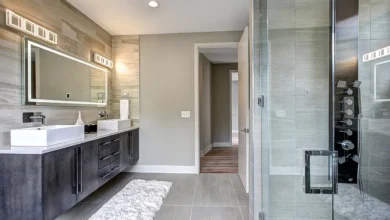

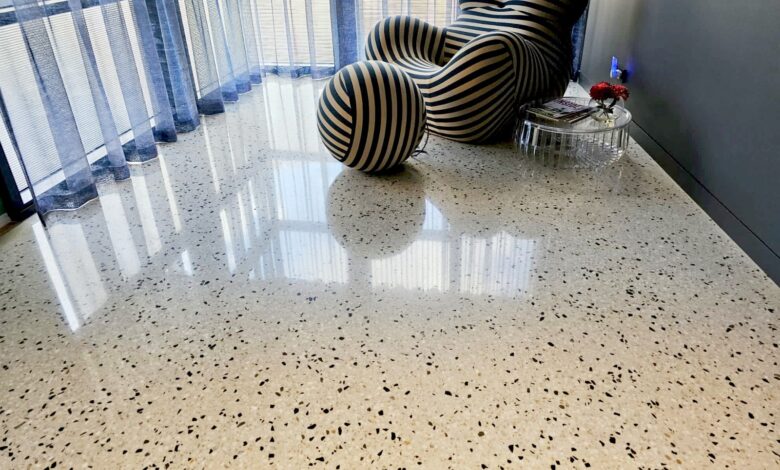
Not only has the appearance of concrete flooring transformed from the plain grey slabs that were once common, but now homeowners and business owners are looking for a style that not only looks good, but is also long-lasting. Two of the more popular types of flooring are decorative concrete flooring and polished concrete flooring. Although both of these types of flooring may seem similar, they are, in fact, quite different.
Learning the difference between the two can help you decide which type of flooring is best for your home, business, or office.
What Are Decorative Concrete Finishes?
Decorative concrete finishes refer to a type of coating or overlay applied on a surface with a unique design effect in mind. This type of finish is mostly concerned with design, colour, texture, and art.
Many decorative concrete floor finishes, as presented by Urban Concrete Floors, are made up of epoxy mixes, cement, and polyurethane coatings, among others. These floor coatings are then applied by skilled artisans directly on site, resulting in a seamless floor finish.
One of the benefits of decorative concrete floor finishes is their ability to be applied on different floor types, such as concrete, wood, or even tiles, thus allowing homeowners to change their floor finish without having to change the original floor.
Decorative concrete floor finishes are advantageous in that they offer a wide variety of design options for homeowners who are interested in changing their floor finish.
Some of these options include textured, stone, and minimalist floor finishes, among many others. Due to their handmade nature, each floor finish will be unique from the others.
These finishes are typically used when the intention is to attain a certain look rather than exposing the raw concrete slab.
What are Polished Concrete Floors?
Polished concrete floors are made by a mechanical process that directly interacts with the concrete slab.
While a coating is not applied, as in other flooring options, the concrete slab is ground and polished.
In the course of polishing, a chemical densifier is applied, which makes the concrete more durable, allowing it to attain a smooth finish.
The amount of grinding determines how much of the aggregate in the concrete slab is exposed.
While some polished concrete floors may have minimal exposure of aggregate, others may have substantial exposure for a dramatic effect.
Polished concrete floors can be done to varying sheens such as matte finish, satin finish, or high gloss finish, among others, depending on the desired look.
Polished concrete is renowned for being long-lasting and requiring little maintenance since it uses the existing slab. This is a common flooring solution in homes, retail stores, and businesses where a long-lasting floor is a requirement.
Key Differences Between Decorative Finishes and Polished Concrete
These two flooring surfaces have the advantage of being aesthetically pleasing.
1. Installation Process
Decorative concrete finishes involve applying a coating or overlay on top of the floor surface. These systems often use specialised materials such as epoxy or cementitious compounds.
Polished concrete floors rely on grinding and polishing the existing slab. No overlay is required because the slab itself becomes the finished floor.
2. Design Flexibility
The decorative finishes allow more flexibility. The colors, textures, and designs can be tailored to suit the desired interior design theme.
Polished concrete finishes have a more natural appearance. This is because the appearance depends on the original slab of concrete.
3. Substrate Requirements
Polished concrete floors require a properly prepared concrete slab. The quality and strength of the slab play a major role in the final outcome.
Decorative finishes are more adaptable and can often be installed over surfaces like tiles or timber if they are structurally sound.
4. Appearance and Style
Decorative finishes may replicate stone, produce a subtle texture, or feature a soft contemporary finish. Each finish is usually one-of-a-kind.
Polished concrete floors feature a sleek, industrial-style finish that is suitable for modern or minimalist rooms.
5. Durability and Maintenance
The two flooring options are durable; polished concrete floors are especially prized for their durability and maintenance-free feature. Sweeping and occasional mopping are all that are required for upkeep.
Decorative finishes are also durable if properly applied, but this will depend on the specific coating system used.
Which Option Is Right for Your Space?
The choice between decorative concrete finishes and polished concrete floors will ultimately depend on your needs.
If you want a floor that is customizable with unique colors or textures, then the best option for you is the decorative finishes. This is also the best option when you are dealing with floors that cannot be polished.
If you want a floor that is durable, easy to maintain, and has a modern look in terms of architecture, then the best option for you is the polished concrete floors.
Conclusion
In conclusion, it is safe to say that both the decorative concrete finishes and the polished concrete floors are great options for floors. The only difference is the way the floor is constructed or designed.
While decorative finishes are based on artistic overlays, polished concrete is based on the beauty of the concrete slab itself.
Determining which option is best for you involves assessing the condition of your current flooring, what aesthetic feel you want from your new floor and how you want it to perform. Both options can be designed to create a beautiful space with the right approach.
FAQs:
1. What is decorative concrete called?
Decorative concrete is also called architectural concrete. It is defined as concrete that is treated to enhance its appearance by the addition of color, texture, patterns, or coatings. It includes decorative concrete finishes like stamped, stained, or textured concrete.
2. What are the 6 types of concrete finishes?
The 6 common finishes are polished, stamped, stained, broom finish, exposed aggregate, and trowel finish. The finishes are different depending on the design, strength, and use.
3. What type of cement is used for decorative purposes?
White cement is commonly used for decorative purposes since it gives bright colours. Portland cement and blended cements are also used for decorative purposes when making decorative concrete finishes, overlays, or colored concrete surfaces.