
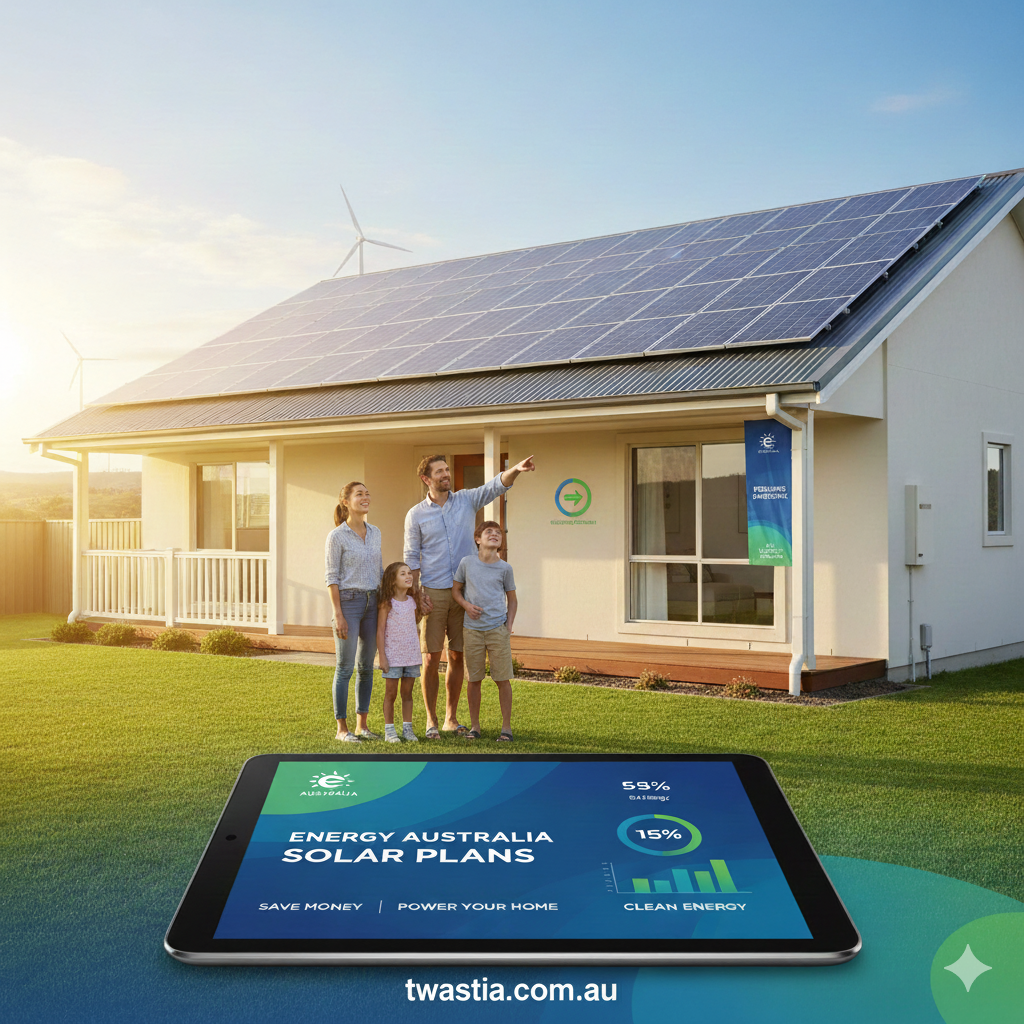
EnergyAustralia offers several solar-ready electricity plans, including the popular Solar Max plan. These plans let households with rooftop solar panels earn a feed-in tariff (FiT) when exporting excess solar energy to the grid. FiT rates vary by state, for example NSW 5.0¢/kWh, VIC 3.3¢/kWh, and QLD 4.6¢/kWh. Plans also include battery options to maximize energy savings.
Introduction
EnergyAustralia solar plans are designed for Australians seeking to maximize rooftop solar benefits. From feed-in tariffs to solar-plus-battery packages, these plans provide both flexibility and potential savings. This article explores state-specific FiT rates, Solar Max plan details, and VPP options, helping homeowners understand their options. By comparing plan structures, we provide insights to make informed energy decisions. Readers will learn how to optimize solar generation, storage, and export under EnergyAustralia’s offerings.
QUICK BIO
| Category | Information |
| Full Name | Energy Australia Solar Plans |
| Established | 1996 |
| Coverage | NSW, VIC, QLD, SA, ACT |
| Plan Options | Solar Max, Standard Solar, Battery-ready, VPP |
| Feed-in Tariff | 3.3–5.0 c/kWh (varies by state) |
| Contracts | Flexible, no lock-in for Solar Max |
| Key Highlight | Supports solar export, battery storage, VPP programs |
What Are Solar Plans from EnergyAustralia
EnergyAustralia’s solar plans combine electricity supply with rooftop solar support. Households can export unused solar energy to the grid and earn credits through a feed-in tariff (FiT). Options include basic solar plans, premium Solar Max plans, and battery-ready packages. Some plans integrate with virtual power plants (VPPs), letting homeowners contribute to grid stability while reducing energy costs. EnergyAustralia offers flexible contracts and supports households aiming for renewable energy efficiency.
FiT and Buyback Rate: How It Works
When a home produces surplus solar energy, EnergyAustralia credits the exported electricity with a feed-in tariff. FiT rates vary by plan and state. For example, Solar Max provides higher FiT for the first 10 kWh daily, after which excess exports revert to the standard rate. This system ensures homeowners earn for surplus energy while balancing grid demand. Actual savings depend on household consumption, panel output, and the chosen plan.
State-by-State FiT Differences and What That Means
FiT rates under EnergyAustralia vary significantly by location. NSW offers 5.0 c/kWh, VIC 3.3 c/kWh, and QLD 4.6 c/kWh. SA has around 4.5 c/kWh. These differences directly impact potential earnings from exported energy. A solar household in NSW may generate higher FiT income than in VIC under similar production levels. Understanding state-specific FiT is essential to calculate potential savings accurately. Homeowners must evaluate local rates before choosing a plan.
Solar Max Plan: What It Offers and Tradeoffs
The Solar Max plan is designed to maximize solar export value. It provides a higher FiT on the first 10 kWh average daily export, with remaining exports credited at the standard rate. The plan features no lock-in contracts, offering flexibility. However, electricity usage rates are variable. Homeowners must consider consumption patterns, as high daytime usage reduces export opportunities. Careful analysis ensures the plan aligns with solar generation and financial goals.
- Also read this :Website Design Service Twastia Elevates Brands Through Powerful Digital Experiences Today
Solar + Battery and Virtual Power Plant (VPP) Add-Ons
EnergyAustralia supports advanced solar setups, including battery storage and VPP integration. Batteries allow households to store energy for evening or peak-hour use, reducing reliance on the grid. VPP programs let participants share stored energy to stabilize the network while earning potential incentives. Combining solar panels, batteries, and VPP access improves savings and maximizes FiT benefits. Households with larger solar systems gain the most from these advanced solutions.
Why Some Users Find FiT Rates Underwhelming
Many standard FiT rates under EnergyAustralia plans are modest. For instance, Victoria’s 3.3 c/kWh may not offset electricity bills for households with low exports. Reductions in FiT over recent years reflect market adjustments. Households exporting small amounts of energy may see minimal financial benefit. Using FiT optimally often requires efficient energy use, solar system optimization, or battery storage to maximize returns. Understanding these nuances is critical before committing.
How to Evaluate if EnergyAustralia’s Solar Plans Work for You
Evaluate location, solar output, and household consumption patterns before selecting a plan. High solar generation with consistent daytime export maximizes FiT. Consider pairing with battery storage to shift energy usage to non-solar hours. Compare variable rates, supply charges, and other retailers’ plans. Understanding export volume, panel capacity, and daily usage ensures informed decision-making. Proper evaluation helps optimize savings while benefiting from EnergyAustralia’s renewable energy options.
Latest FiT Trends & Recent Changes (2024–2025)
FiT rates have declined in recent years, reflecting broader market trends. Reduced buyback rates in NSW, VIC, QLD, and SA affect overall savings. Rooftop solar economics now depend on export volume, household consumption, and storage capabilities. Understanding these trends helps homeowners anticipate changes in financial returns. Planning system size, battery storage, and consumption patterns is essential to maximize benefits under current EnergyAustralia plans.
Expert Insights: Why Solar Plans Are Evolving
Analysts note EnergyAustralia and other retailers adjust FiT rates to reflect grid pressures and wholesale market conditions. Lower FiTs stabilize costs and encourage adoption of storage solutions. Plans now integrate solar, battery, and VPP options to manage peak demand efficiently. Households gain flexibility while supporting renewable energy adoption. This evolution makes solar plans not just an export opportunity but a smart energy management tool.
Real-World Considerations: Panel Size, Export Thresholds & Eligibility
Eligibility depends on solar system size, inverter type, and export history. Households must meet EnergyAustralia’s requirements for FiT eligibility. Export thresholds affect potential credits under Solar Max. Not all households with solar can access premium plans. Understanding system specifications ensures households avoid disappointment and can optimize FiT benefits. Proper sizing and installation maximize returns from both standard and premium solar plans.
How Solar Plans Fit into Australia’s Renewable Shift
EnergyAustralia’s solar plans contribute to renewable energy adoption. By supporting rooftop solar, battery storage, and VPPs, they reduce reliance on fossil fuels. These plans stabilize the grid while allowing households to control energy use. Distributed energy resources enhance sustainability and reduce peak load stress. Australians adopting these plans support both financial savings and national renewable energy targets.
Common Mistakes When Switching or Signing Up
Assuming FiT guarantees substantial earnings is a common mistake. Many households overestimate returns, especially in low-FiT states. Ignoring variable usage rates can reduce savings. Not confirming eligibility or system specifications may result in ineligibility. Planning without understanding household consumption patterns often leads to suboptimal benefits. Proper analysis ensures households maximize FiT, storage, and energy management under EnergyAustralia plans.
Who Benefits Most from EnergyAustralia Solar Plans
Homeowners with high solar output, ample rooftop space, and flexible consumption benefit most. Battery storage and VPP participation further enhance savings. Consistent daily export and smart energy usage maximize financial returns. Households matching solar generation to daytime consumption patterns will see the greatest advantage. Solar Max and other EnergyAustralia plans are best suited for those willing to optimize both generation and consumption.
Key Takeaways: Balancing Pros & Cons
EnergyAustralia solar plans help monetize surplus energy and reduce grid dependence. Advantages include flexible Solar Max contracts, FiT earnings, and renewable support. Limitations include modest FiT in some states, variable rates, and export thresholds. Maximizing savings requires smart usage, battery storage, and awareness of state-specific rates. Careful planning ensures households achieve optimal financial and environmental benefits.
FAQs
What is a feed-in tariff (FiT) under EnergyAustralia solar plans?
FiT is the credit received for exporting surplus solar energy. Rates vary by state and plan type.
Can I use any EnergyAustralia plan if I have solar panels?
Eligibility depends on solar system size, inverter type, and export thresholds. Premium plans may have extra conditions.
Does Solar Max guarantee higher earnings from solar export?
It provides higher FiT for a daily threshold. Excess exports revert to standard FiT. Overall benefit depends on household export volume.
Are electricity usage rates under Solar Max fixed?
No, rates are typically variable, so changes in wholesale or supply costs may affect bills.
Is battery storage necessary to benefit from EnergyAustralia solar plans?
Not required, but storage maximizes value by shifting energy use and reducing reliance on grid supply.
Why do feed-in tariffs differ across states?
Different market conditions and regulations affect FiT rates, varying state to state.
Will switching to EnergyAustralia always reduce my electricity costs?
Not always. Savings depend on export volume, consumption patterns, and variable rates.
For more info :twastia.com.au