

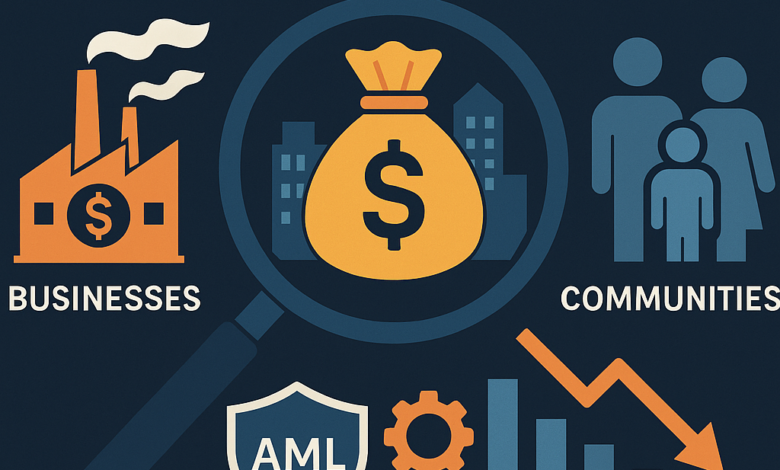
Financial crime is not a distant problem happening behind closed doors in corporate offices. It affects families, local businesses, and national economies every day. When criminals move illegal funds through banks, fintechs, and digital payment platforms, the damage ripples far beyond direct financial loss. It weakens trust, disrupts fair competition, finances dangerous criminal networks, and slows global development.
Many people imagine money laundering as a dramatic crime tied only to drug cartels or corrupt leaders. The real-world impact is much larger and much closer to home. As outlined in the discussion on the dangers of money laundering at Flagright, expectations often underestimate how deeply financial crime can destabilize communities:
https://www.flagright.com/post/dangers-of-money-laundering-expectations-vs-reality
Understanding how financial crime impacts real people and real economies is key to building better prevention strategies.
Why Financial Crime Is So Damaging
Financial crime includes a broad set of activities such as fraud, corruption, cybercrime, terrorist financing, digital identity theft, and large scale tax evasion. All of these crimes rely on the ability to move and disguise money within financial systems.
When illicit funds enter the economy, criminals grow stronger while legitimate businesses lose ground. Entire industries can become distorted, pushing down innovation and slowing growth.
Major financial crime categories that fuel economic instability
- Payment fraud
- Money laundering and layering schemes
- Identity and account takeover
- Corruption and bribery
- Underground financial networks
- Cyber theft and ransomware payments
The United Nations Office on Drugs and Crime estimates that money laundering represents 2 to 5 percent of the global GDP, totaling 800 billion to 2 trillion dollars every year. That scale affects interest rates, investment confidence, and currency stability.
How Financial Crime Harms Legitimate Businesses
Illicit money changes how competition works. Criminal networks reinvest illegal profits into businesses that appear legitimate, allowing them to operate at artificial prices and absorb losses that real companies cannot match.
Consequences for legitimate companies
- Unfair competitive pressure that pushes ethical businesses out of markets
- Increasing compliance and auditing costs
- Difficulty maintaining investor and customer trust
- Higher insurance and regulatory burden
- Lower access to credit or banking services following industry scandals
A business tied even accidentally to financial crime faces frozen accounts, license restrictions, litigation, or full shutdown.
How Financial Crime Affects Communities and Consumers
Communities feel the effects of financial crime long before headlines appear. Increased financial fraud affects households through hidden costs.
Real impact on consumers
- Higher banking and transaction fees
- Increased tax pressure to support enforcement and recovery
- Job losses due to business failures linked to unfair competition
- Reduced access to loans and fair pricing
- Anxiety caused by identity theft or unauthorized withdrawals
When confidence declines, spending slows and national growth declines.
How Developing Countries Are Affected
Developing nations face some of the harshest impacts. Illegal outflows drain capital needed for infrastructure and public programs.
Side effects include
- Higher borrowing costs and reduced foreign investment
- Slower economic growth
- Widened poverty and inequality
- Weakening of public institutions
The World Bank estimates that illicit financial flows cost African nations more than 88 billion dollars each year. That is money that could support education, healthcare, and development.
Financial Crime as a Threat to Global Security
The profits from financial crime support activities such as human trafficking, arms smuggling, and terrorism. When those networks strengthen, political stability and public safety decline.
Associated security risks
- Increased violence and organized criminal activity
- Weakening of democratic systems
- Funding channels used for extremist activity
- Social unrest and pressure on migration systems
Combating financial crime reduces both national and international security threats.
Why Strong AML and Compliance Frameworks Matter
AML systems and regulatory frameworks exist to detect suspicious behavior early and prevent illegal money from moving through the financial system. Strong systems support transparency and long term economic stability.
Advantages of strong AML enforcement
- A safer digital payment environment
- Increased investor confidence
- Protection against corruption
- Reduced fraud losses
- Better risk visibility for financial institutions
Modern tools such as automation, real time monitoring, and unified data analysis help institutions respond quickly and accurately. Many organizations now adopt financial compliance software to strengthen oversight, improve monitoring accuracy, and reduce manual errors that allow financial crime to slip through.
Challenges Institutions Face in Preventing Financial Crime
Despite progress, institutions continue to face challenges.
Common obstacles include
- Legacy technology and siloed systems
- High false positive rates
- Regional regulatory inconsistencies
- Limited real time response capability
- Skills and staffing shortages in compliance teams
These challenges make it difficult to keep up with rising criminal sophistication.
Building a Stronger Prevention Strategy
Stopping financial crime requires cooperation between banks, regulators, fintechs, payment processors, law enforcement, and consumers.
Key steps for institutions
- Improve real time transaction visibility
- Strengthen internal governance and culture
- Use risk based monitoring instead of manual review
- Invest in analytics and automation
- Increase employee education and customer awareness
- Improve data quality and centralization
Better prevention protects real people and strengthens entire economies.
Creating a Safer Financial System
Financial crime is not only a regulatory issue. It is a social, economic, and ethical issue that requires collective effort. Stopping illegal money flows protects communities, restores fairness to markets, and creates a safer global financial system.
When institutions commit to smarter prevention strategies and modern compliance tools, the world becomes safer and more stable for everyone.
Every improvement in AML protection strengthens public trust and builds a healthier financial future.
