
Imagine buying a pair of hiking boots for yourself without checking the size. You head out on a five-mile trek, and within twenty minutes, your heels are blistered and your toes are crushed. You would be miserable, right?
The same applies to your dog.
While many owners focus on the durability or the color of dog shoes, the most critical factor is actually the fit. A boot that is too loose will fly off into a snowbank the moment your dog starts running. A boot that is too tight can restrict blood flow and cause painful chafing.
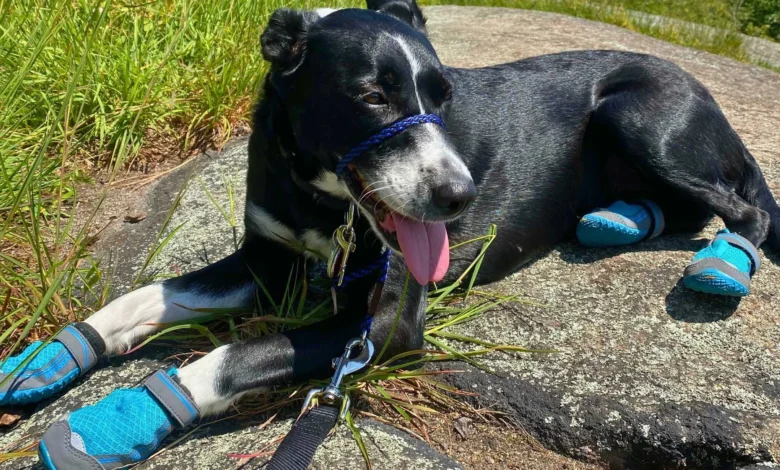
Getting the size right is the secret to successful outdoor adventures. When you find the perfect fit in Waterproof Dog Boots, your dog moves naturally and confidently, protected from the elements without feeling restricted.
Here is exactly how to measure your pup’s paws to ensure comfort on every trail.
Why “Guesstimating” Doesn’t Work
You might think you know your dog’s size because they wear a “Large” collar or harness. However, paw size does not always correlate with body size. A Greyhound might have a tall, lanky body but narrow paws, while a Bulldog might be shorter but have wide, flat paws.
Manufacturers also use different sizing standards. A “Size 4” in one brand might be a “Size 6” in another. Therefore, you cannot rely on breed assumptions or previous purchases. You must measure the actual paw to get the benefits of high-quality Waterproof Dog Boots.
Step-by-Step Guide: Measuring Your Dog’s Paws
Measuring a wiggly dog can be a challenge, but it is worth the effort. You will need a piece of paper, a pen, and a measuring tape or ruler.
Step 1: Prep the Environment
Get your dog to stand on a hard, flat surface. It is much harder to get an accurate reading on plush carpet or grass. Have some treats ready to keep them calm.
Step 2: The “Weight-Bearing” Stance
This is the most important step. Place a piece of paper under one of your dog’s front paws. Lift the opposite front paw so that your dog’s weight shifts fully onto the paw you are measuring.
Why do this? When a dog stands or runs, their toes splay out slightly. If you measure the paw while the dog is lying down or sitting, you will get a measurement that is too small, leading to tight boots.
Step 3: Trace the Outline
Using your pen, trace the outline of the paw. Keep the pen upright and vertical; if you angle it inward, you will undercut the size. Make sure to mark:
- The widest part of the paw (usually the toe area).
- The length from the tip of the longest nail to the back of the main pad.
Step 4: Measure and Repeat
Use your ruler to measure the width and length markings on the paper. Write these down.
Repeat this process for the back paws. Often, a dog’s rear paws are smaller than their front paws. If the difference is significant, you might need two different sizes of Waterproof Dog Boots to ensure a proper fit for all four feet.
Understanding the Width vs. Length
Most dog boots are sized primarily by width. This is because the width determines whether the foot can slide in comfortably.
If your measurement falls exactly on a size line, the general rule of thumb is to size up. It is better to have a boot that is slightly roomy than one that crushes the toes.
For Waterproof Dog Boots, you generally want the inner width of the boot to be slightly larger than your dog’s paw width. This allows for the natural splay of the toes when walking. If you plan to use socks or liners for extra warmth in the winter, you should definitely consider sizing up to accommodate the extra bulk.
The “Shake” Test: Checking the Fit at Home
Once your new boots arrive, do not head straight for the mountains. You need to verify the fit indoors first.
- Put them on: Loosen the straps or dial completely. Slip the paw in and ensure it goes all the way to the toe of the boot.
- Secure them: Tighten the straps or the Dial Fit System. It should be snug, like a firm handshake, but not cutting off circulation.
- The Shake Test: Gently tug on the boot. It should not slide off easily.
- The Walk Test: Let your dog walk around the house. It is normal for them to “high-step” or walk funny for the first few minutes—this is just them getting used to the sensation. Encourage them with treats.
- Check for Slippage: Watch them trot. Does the boot rotate? If the sole of the boot twists around to the top of the foot, the boot is likely too large or not tightened enough.
Signs of a Bad Fit
Pay attention to your dog’s behavior. If they are constantly chewing at the boots or refusing to move, the fit might be uncomfortable.
After a short 10-minute session, take the boots off and inspect their paws. Look for red marks or hair loss, particularly around the dewclaw area (the “thumb” claw on the side of the leg). If you see redness, the boots might be too tight or you may need to use boot liners to prevent friction.
Conclusion
Taking five minutes to measure your dog’s paws correctly can save you hours of frustration and returns. It ensures that when you strap on their Waterproof Dog Boots, they stay on through mud, snow, and sprints.
Proper sizing is the difference between a dog who tolerates boots and a dog who loves them because they know it means adventure time. Grab your tape measure, grab some treats, and get ready to find the perfect fit for your furry trail companion.