Is Australian Manufacturing Really Coming Back? What Metal Fabricators Are Seeing on the Ground

The narrative around Australian manufacturing has been one of contraction and decline for decades. Globalisation, offshore competition, and rising local production costs led many to believe that heavy industry and metal fabrication in Australia were fading into history. Yet, recent trends suggest a more nuanced picture. From defence contracts to infrastructure projects, and from renewable energy to domestic supply chain resilience, the country’s manufacturing sector appears to be experiencing pockets of growth — particularly for metal fabricators. But what is the reality on the ground? Are Australian manufacturers truly making a comeback, or is it merely a series of isolated successes?
The Context: Manufacturing in Australia Today
Australia’s manufacturing sector has undergone a dramatic transformation over the past 30 years. Once dominated by large-scale production for domestic markets, it has shifted toward specialised, high-value, and niche production. The number of large factories has declined, but smaller, agile operations that can serve sectors like defence, mining, and renewable energy are increasingly important.
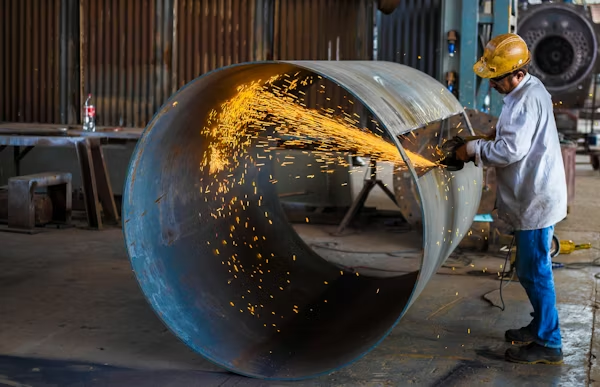
Metal fabrication, in particular, has become a bellwether for the health of Australian manufacturing. Fabricators supply everything from structural steel for infrastructure projects to customised components for machinery and transport. Even niche services, such as metal perforation Perth, are seeing growing demand from construction and architectural projects, highlighting the diversification of fabrication work locally. These businesses are acutely sensitive to changes in both local demand and global supply chains, making them a reliable indicator of whether manufacturing activity is genuinely growing or merely fluctuating.
Rising Demand in Key Sectors
On the ground, metal fabricators report increased activity in several sectors. Infrastructure spending, driven by state and federal governments, has been a consistent source of work. Large-scale projects — including road and rail upgrades, port expansions, and urban development — require significant steel and metal components, providing steady work for local fabricators.
Similarly, the defence sector is generating strong demand. Australia’s $270 billion Defence Strategic Update has created a pipeline of projects that require domestically fabricated components for naval ships, armoured vehicles, and aircraft maintenance. Fabricators with the capacity and certification to meet defence standards have reported backlogs extending months in advance, signalling strong growth in this niche.
Mining and resources, particularly in Western Australia and Queensland, also continue to buoy metal fabrication. Equipment maintenance, custom machinery, and structural components for mining infrastructure are high-margin areas that remain resilient even during commodity price fluctuations.
Finally, renewable energy projects — including wind farms, solar installations, and hydrogen facilities — are emerging as an unexpected growth driver. These projects often require specialised metal components, from steel frames to mounting systems, which must meet strict engineering standards. Fabricators who can adapt to these new requirements are seeing opportunities that were not available a decade ago.
The Challenges: Costs, Skills, and Supply Chains
Despite the positive signals, fabricators also face significant challenges. Rising steel prices and energy costs have put pressure on margins. Australia’s relatively high labour costs, combined with a shortage of skilled tradespeople, make it difficult for some smaller shops to scale up production. Welders, boilermakers, and CNC operators are in particularly short supply, leading many fabricators to compete aggressively for talent or invest in training programs to upskill their workforce.
Supply chain reliability is another concern. While local projects are keeping fabricators busy, imported materials — whether steel sheets from Asia or specialised fasteners from Europe — can face delays or price volatility. Fabricators have had to improve inventory management, negotiate long-term contracts, and invest in local sourcing strategies to mitigate these risks.
Automation and Innovation: The New Competitive Edge
Many fabricators are responding to these challenges by embracing automation and digitalisation. CNC machines, robotic welding, and software-driven production planning are becoming increasingly common, allowing smaller shops to deliver complex products faster and with higher precision. These innovations not only address labour shortages but also enhance competitiveness against offshore suppliers.
Innovation is also driving growth in niche markets. Fabricators that specialise in high-tolerance components, lightweight alloys, or customised structural elements are better positioned to capture contracts that require specialised expertise. In a sense, Australian metal fabrication is moving from volume-driven production to knowledge-driven production, where engineering skill, quality, and compliance are the differentiating factors.
Localisation: A Growing Imperative
The COVID-19 pandemic highlighted vulnerabilities in global supply chains, prompting many Australian businesses to reconsider offshore manufacturing. Governments and private companies alike are prioritising domestic suppliers to reduce risk and improve resilience. This has had a tangible effect on metal fabrication, with some fabricators securing contracts simply by being local and able to deliver reliably within tight timelines.
Additionally, environmental and sustainability pressures are influencing procurement decisions. Australian buyers increasingly value suppliers who use recycled steel, reduce waste, and implement energy-efficient processes. Fabricators who can demonstrate environmental responsibility are not only meeting regulatory requirements but also gaining a competitive advantage.
What Fabricators Are Experiencing
On the ground, the experience varies by region and sector. Fabricators in mining-heavy areas like Perth and regional Queensland report steady orders and a backlog of projects. Defence-oriented shops in Adelaide and Melbourne are benefiting from long-term contracts and higher margins. Meanwhile, smaller urban fabricators face more competition for contracts but are finding niches in bespoke products, engineering-intensive components, and rapid-turnaround jobs.
Many fabricators also report that the market is increasingly competitive in terms of quality and compliance. Winning contracts often requires certification to ISO standards or adherence to specific engineering codes. While this raises the barrier to entry, it also strengthens the position of established players who have invested in capabilities and staff training.
Is Manufacturing Really Coming Back?
So, is Australian manufacturing truly on a rebound? The answer is cautiously optimistic. The growth is not uniform across all sectors, and Australia is unlikely to regain mass-volume manufacturing in the way it existed decades ago. However, in targeted areas — infrastructure, defence, mining, and renewables — there is genuine expansion. Metal fabricators, particularly those who embrace technology, upskilling, and sustainability, are seeing real opportunities.
The revival is less about competing with low-cost international production and more about delivering specialised, high-value, and reliable solutions. Fabricators that can combine technical skill, operational efficiency, and compliance with environmental standards are the ones that will thrive.
Looking Ahead
The coming decade will test Australian fabricators’ ability to adapt. Governments are likely to continue investing in infrastructure and defence, while private industry will demand resilience and sustainability in their supply chains. Fabricators who fail to innovate, invest in workforce development, or embrace automation may struggle, but those who do will be at the forefront of a manufacturing sector that is small in scale compared to its past but sophisticated, resilient, and indispensable to the national economy.
In conclusion, Australian manufacturing is not “coming back” in the sense of returning to mass-volume production. Instead, it is evolving into a leaner, smarter, and more strategically focused industry. For metal fabricators on the ground, the message is clear: opportunities abound for those willing to adapt, innovate, and meet the high standards demanded by modern Australian industry.