
Ready to Replace Your Hot Water System? Why a Heat Pump is the Smartest Buy in Australia in 2026

Your hot water system is costing you more than it should. If you’re still running gas or a conventional electric storage system, you’re paying a premium every single month for a technology that has been overtaken — and in many parts of Australia, is actively being phased out.
The decision is no longer whether to switch to a heat pump hot water system. For most Australian households in 2026, it’s simply which one and how quickly.
All-In-One vs Split Heat Pump — Make the Decision Now
There are two types of heat pump hot water systems and confusing them leads to the wrong purchase.
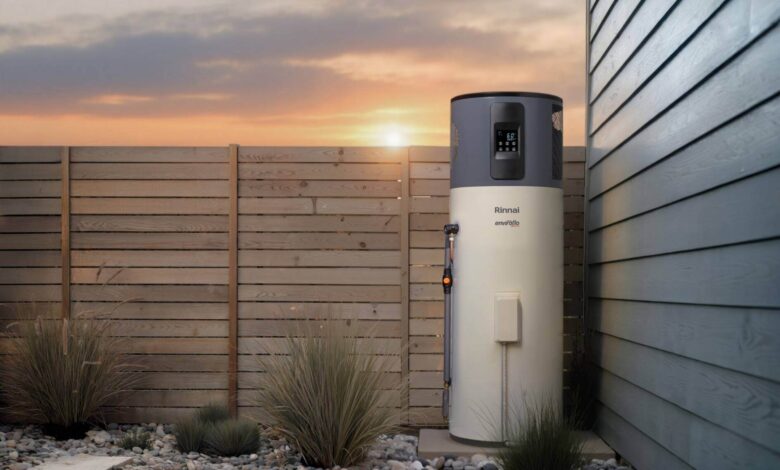
An all-in-one heat pump system integrates the compressor, heat exchanger, and storage tank into a single self-contained unit. Everything sits in one place — typically outdoors or in a well-ventilated garage. Installation is straightforward, faster, and cheaper because there are no refrigerant lines running between separate components. It’s the right choice for most homes with outdoor space or an accessible garage.
A split heat pump hot water system separates the outdoor compressor from the indoor storage tank, connected by refrigerant lines through the wall. The tank can be installed in a cupboard or utility room while the compressor sits outside. It performs slightly better in very cold climates because the tank is protected from outdoor temperature extremes, and it suits properties where an all-in-one unit cannot be accommodated outdoors.
| All-In-One | Split System | |
| Space needed | Outdoor or ventilated area | Indoor tank + outdoor compressor |
| Installation time | Half day | Full day |
| Installed cost | $2,000 – $4,500 | $3,500 – $6,000 |
| Cold climate performance | Good | Better |
| Best for | Most homes | Limited outdoor space or cold climates |
Verdict: If you have outdoor space or a garage, the all-in-one is the simpler and more cost-effective choice. If your property is constrained or you’re in a particularly cold region such as alpine Victoria or the ACT, the split system is worth the extra investment.
What Size Do You Need? Don’t Get This Wrong
Undersizing your tank means cold showers during peak demand. Oversizing means you’re heating more water than you ever use — wasting the efficiency advantage you bought the system for.
| Household Size | Recommended Tank |
| 1–2 people | 200L |
| 3–4 people | 270L |
| 4–5 people | 315L |
| 5+ people or high usage | 400L+ |
Two additional factors affect sizing. First, if your household is heavy on baths rather than showers, or has multiple bathrooms used simultaneously in the morning, size up by one tier. Second — if you’re pairing the heat pump with solar panels, a larger tank works in your favour. A 315L tank charged during peak solar generation hours stores enough hot water to carry a 3–4 person household through the evening and following morning without touching grid electricity.
Real Installed Prices in 2026 — What to Budget
Here are realistic supply-and-install cost ranges before rebates:
All-In-One Systems:
- 200L: $2,000 – $2,800
- 270L: $2,800 – $3,800
- 315L: $3,500 – $4,500
Split Systems:
- 250–270L: $3,500 – $5,000
- 315L+: $4,500 – $6,000
Installation costs increase if your property requires a new electrical circuit, a dedicated circuit breaker, or significant plumbing modifications. A straightforward like-for-like replacement of an existing electric storage system is the lowest-cost scenario. After rebates, the numbers look considerably better — which brings us to the most important part.
Every Rebate Available to You Right Now
Australian government rebate programs for heat pump hot water systems are among the most generous available for any home appliance. Here is exactly what’s on the table in 2026.
Victoria — Victorian Energy Upgrades (VEU): The VEU program subsidises the cost of eligible heat pump hot water systems at the point of sale through accredited providers. Both homeowners and renters qualify. In many cases the out-of-pocket cost after the subsidy is dramatically reduced — in some circumstances to near zero for a standard installation replacing an old electric system. To access VEU pricing, you must purchase through a VEU-accredited provider.
New South Wales — Energy Savings Scheme (ESS): The ESS generates certificates for eligible energy-efficient upgrades which are passed on as a direct discount on your purchase price. Homeowners and small businesses replacing gas or inefficient electric hot water systems qualify. The discount is applied at point of sale with no paperwork required from the customer.
ACT — Sustainable Household Scheme: ACT residents can access rebates and interest-free loans for heat pump hot water installations. Combined with federal STCs, this scheme can cover a significant portion of the total installed cost.
Federal — Small-scale Technology Certificates (STCs): Eligible heat pump hot water systems generate STCs under the federal government’s Small-scale Renewable Energy Scheme. These certificates have a dollar value that accredited installers apply directly to your purchase price at the point of sale. STC values step down annually as the scheme phases toward its 2030 conclusion, meaning the financial benefit is higher now than it will be next year.
Stacking tip: Victorian and NSW homeowners can combine their state rebate with federal STCs. A Victorian household replacing a gas hot water system with a 270L heat pump could realistically access $800 to $1,500 in combined rebate value depending on the system and installer.
Critical: You must purchase through an accredited provider to access any of these programs. Buying retail and claiming later is not how these schemes work.
Solar + Heat Pump — The Ultimate Combination
If you have rooftop solar — or plan to install it — pairing it with a heat pump hot water system is the single highest-return energy upgrade available to Australian homeowners right now.
The strategy is simple: programme your heat pump to run between 10am and 3pm when your solar panels are generating at peak output. Instead of exporting that excess energy to the grid at a low feed-in tariff, you’re using it to heat water for free. With a correctly sized tank, a household can effectively eliminate hot water costs on sunny days — which in most Australian locations means the majority of the year.
Astra Green Solutions supplies and installs both heat pump hot water systems and solar solutions, and their team can configure the system to maximise solar integration from day one. As a VEU and ESS accredited provider operating across Victoria, New South Wales, and Canberra ACT, Astra Green Solutions handles the full rebate process on the customer’s behalf — meaning you don’t navigate any of the paperwork yourself. Get a free quote at astragreensolutions.com.au or call 1300 321 786.
How to Choose an Installer You Can Trust
Heat pump installation involves both refrigerant handling and electrical work. In Australia, refrigerant work legally requires an ARC (Australian Refrigeration Council) licence and electrical connections require a licensed electrician. Ask for both licence numbers before signing anything.
Beyond licencing, confirm the installer is accredited under the VEU and/or ESS scheme relevant to your state — otherwise you forfeit your rebate entitlement entirely. A legitimate quote will itemise the system cost, installation labour, and any additional electrical or plumbing work separately. Any quote that bundles everything without a breakdown should prompt further questions.
Warranty matters too. Insist on a minimum five-year warranty on the unit, a separate tank warranty, and a written workmanship warranty covering the installation itself.
Stop Paying for Expensive Hot Water
The numbers are clear. A quality heat pump hot water system cuts hot water energy costs by 60–70%, qualifies for significant government rebates, and pays for itself within three to five years — after which the savings are pure return.
Gas prices are not falling. Rebate values are not rising. The best time to make this upgrade is now.
Get a free quote and rebate eligibility check from Astra Green Solutions at astragreensolutions.com.au or call 1300 321 786.
