

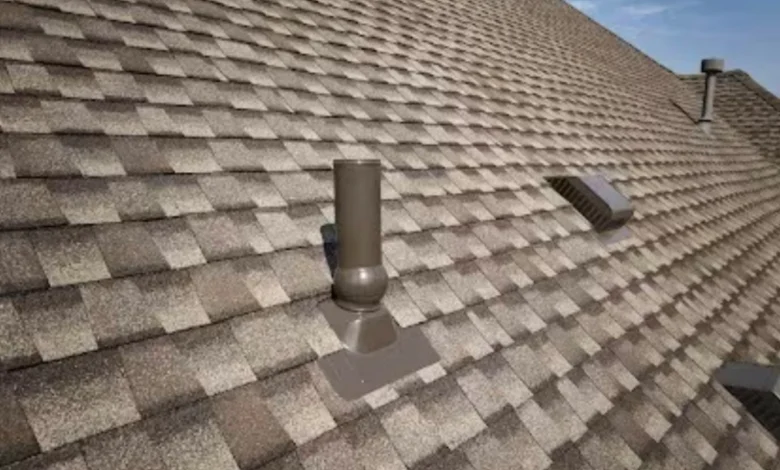
When it comes to roof penetrations, compromise has long been part of the conversation. Anyone involved in designing, building, or fine-tuning residential airflow understands the challenge: effective roof ventilation has traditionally meant sacrificing clean architectural lines for bulky rotary turbines or complicated multi-part cowl systems, simply to allow the building envelope to breathe.
But the industry is shifting, and the Alpine Low Profile Roof Vent is driving a lot of that change. It’s an elegant piece of engineering that solves some of the most persistent headaches in roof cavity ventilation and HVAC ducting. Here is a breakdown of why this unit is quickly becoming the spec of choice over legacy competition.
1. The Single-Unit Advantage
Anyone who has installed a traditional rangehood or exhaust vent understands how involved the process can be. Typically, it requires fitting a steel pipe, shaping and sealing the flashing, and then attaching a cowl on top. It is a three-part system that adds complexity and creates multiple opportunities for water ingress.
Alpine has completely rethought that approach. Its patented design combines the flashing, neck, and protective dome into one integrated unit. The result is a simpler installation process, fewer failure points, and a much cleaner finish.
• Traditional approach: Longer installation time, greater reliance on sealants, and a more visible roof profile.
• Alpine approach: A streamlined fit-and-secure system that reduces labour, simplifies installation, and significantly lowers the risk of leaks.
2. Making More Room for Solar
For anyone planning a photovoltaic system, conventional roof vents can be a major obstacle. Their height creates shading issues that can affect system performance, while also occupying valuable roof space that could otherwise be used for solar panels.
Because Alpine vents sit so close to the roofline, they can be installed beneath solar panels without creating the same level of obstruction. This makes it possible to preserve effective roof ventilation while maximising solar panel placement, which is especially valuable on roofs with limited usable space.
3. Passive Ventilation That Works with Nature
Traditional whirlybirds depend on moving parts and wind-driven operation. Over time, bearings can wear out, seize, or begin to make noise, reducing performance and increasing maintenance requirements.
Alpine takes a different approach with a static design that works through natural airflow principles. By using the stack effect, where rising hot air escapes upward, together with aerodynamic pressure created by breezes moving across the dome, the system helps draw stale air out of the roof cavity efficiently and quietly.
• No moving parts: No mechanical wear, no maintenance, and no operating noise.
• Steady performance: Airflow support without relying on strong wind conditions.
4. Stronger Protection in Harsh Conditions
In Australian conditions, a roof vent must do more than release warm air. It must also resist rain penetration, prevent pest entry, and meet strict bushfire-related building requirements where applicable.
Alpine vents are engineered with an internal deflector and overhanging profile designed to reduce the risk of wind-driven rain entering the system. They also incorporate a 2mm aperture steel mesh to block birds, rodents, and ember intrusion. This helps the unit achieve BAL-40 compliance while maintaining airflow performance, making it a practical solution for demanding environments.
5. A Vent Designed to Disappear
From an architectural perspective, the best roof vent is one that does its job without drawing attention to itself. Traditional cowls and rotary vents often protrude sharply from the roof, interrupting the overall design.
Alpine vents are manufactured from high-grade powder-coated aluminium and stainless steel and are specifically designed to sit low against the roofline. Available in colour-matched Colorbond® finishes such as Monument®, Surfmist®, and Shale Grey™, they blend neatly into both metal and tiled roofs. For projects requiring a custom finish, a paintable option is also available, allowing for an even more seamless visual result.
The Bottom Line
The Alpine Low Profile series represents exactly what we want to see in building materials: smart consolidation of parts, awareness of modern home tech (like solar), and bulletproof reliability. It’s not just a better looking vent; it’s a structurally superior approach to airflow. Alpine sells their products including the low profile roof vents across a wide network of resellers from Dahlsens, Bowens, Tradelink, Accord Air and many more.