

Image: Link
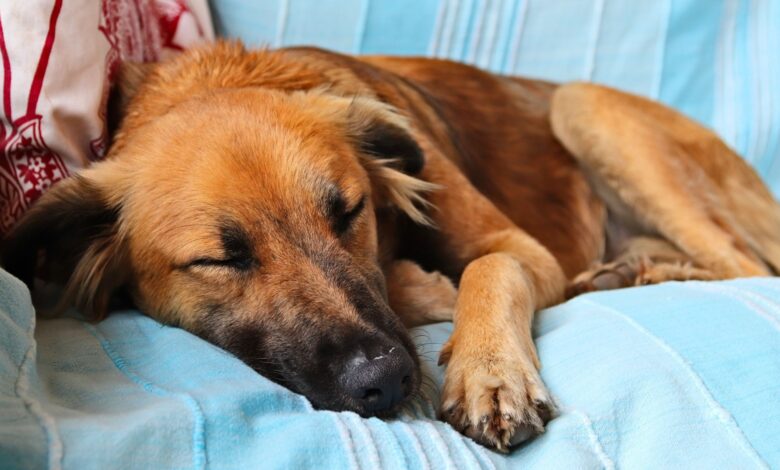
If you’ve ever looked over at your dog snoozing in the corner again and wondered whether they’re just being lazy, we’ve got news for you: they’re not.
How much sleep do dogs need by age? Sleep matters more than people think. The body repairs itself during rest. The brain stores new learning. Emotions also settle during sleep.
How Much Sleep Do Dogs Need by Age?
A dog’s sleep needs to change as they grow. But unlike us, they don’t feel guilty about a midday nap. Here’s a detailed guide:
Puppies (8 weeks – 1 year): 18–20 hours a day:
New puppies sleep most of the day. Up to 20 hours is normal to support fast growth. The body builds muscle and develops during rest. This is not laziness. It is growth.
Puppies sleep in short naps throughout the day. Night sleep is lighter and often broken. Training may not stick as well. A tired puppy struggles to focus and learn new things.
Adolescent Dogs (3–18 Months): 14–18 Hours a Day
The teenage phase is normal for dogs. It usually starts around 6 to 18 months. Behavior often shifts during this time. Training can feel less reliable. Listening may drop.
This happens because the brain is still developing. Emotions and impulse control are not fully stable yet.
Sleep still matters at this stage. Most adolescent dogs sleep about 14 to 18 hours a day. Some sleep less or more based on breed and activity.
Sleep is deeper than in puppy stages. It supports learning and recovery. A calm sleep space helps the dog rest properly.
Hormones can affect sleep patterns. Nights can mean long rest, then sudden bursts of energy.
A steady daily routine helps balance this. Walks, short training, and play during the day support better sleep at night.
Adult dogs (1 – 7 years): 12–14 hours a day:
Adult dogs rest about 12 to 14 hours each day. Most reach this pattern between 12 and 24 months, based on breed. Puppies move into this stage at different times based on growth.
Sleep becomes more regular in adulthood. Most rest happens at night, often between 8 pm and 8 am. Daytime sleep turns into short naps based on activity levels.
Breed size affects sleep. Large dogs sleep more hours. Small dogs stay active longer and sleep less.
Energy level also affects rest. Working breeds like Border Collies and Australian Cattle Dogs need more activity and less sleep. Calm breeds rest more.
Daily movement affects sleep quality. Long walks, play, or training lead to deeper sleep at night. The body uses rest to recover from physical and mental effort.
Senior dogs (7+ years): 16–18 hours a day:
Senior dogs often sleep more again. This stage starts at different ages. Large breeds may reach senior years around five. Smaller breeds may not reach it until seven or eight.
Sleep needs rise to about 16 to 18 hours a day. Some dogs sleep even longer. Rest comes in longer naps through both day and night.
This increase is not boredom. The body slows down. Energy drops. Recovery takes longer after normal activity like walking or playing.
Sleep also supports health in older dogs. Older dogs can develop changes in brain function. Signs may include broken sleep, night restlessness, or extra daytime sleep.
Comfort becomes more important in this stage. Joints feel stiffer. Muscles lose strength. A dog bed helps reduce pressure and allows deeper rest.
Why Do Dogs Need So Much Sleep?
Dogs often sleep in odd positions. Paws in the air are normal. They sleep more than humans.
Sleep does more than rest the body. It helps the body repair. The brain stores what was learned.
This is why dogs need so much sleep. Their body, brain, and emotions all rely on proper rest. A well-rested dog stays calm. Focus improves. Behavior becomes more steady.
Physical recovery
Every run, tug, and zoomie puts a small strain on muscles. Sleep repairs that strain. Without enough deep rest, recovery slows. Energy drops. The body feels tired more often.
Brain processing:
Sleep helps dogs sort through the day. New smells, training, and experiences get stored during rest. Without enough sleep, learning weakens. Focus drops. Dogs often sleep in odd positions. Paws in the air are normal. They sleep more than humans.
Sleep does more than rest the body. It helps the body repair. The brain stores what was learned.
Emotions settle during this time.
Emotional balance:
Rested dogs handle stress better. Loud sounds, visitors, or sudden changes feel easier to
manage. Poor sleep leads to irritability and fast reactions. Sleep supports the whole system.
The body, brain, and behavior all rely on it.
The Sleep–Training Connection
Sleep affects training more than most expect. A tired dog learns slower. Focus drops fast. Repetition stops working well. Frustration builds during sessions.
Studies on dog learning show better command recall after rest. Dogs remember training better after a nap. Sleep helps lock in what was learned.
Short training works best. Rest periods between sessions help learning stick. Sleep is part of training, not separate from it.
What Happens When Dogs Don’t Get Enough Sleep?
When dogs do not get enough sleep, problems can show up quickly.
- Get upset or angry more easily.
- Feel more stress and play less.
- Forget commands or learn slower.
- Get sick more often.
- Show more bad behavior.
In other words, a tired dog isn’t lazy. Their body and brain need rest.
Give Sleep a Home: Why a Proper Bed Matters
You can have the perfect sleep schedule, but if your dog’s resting spot is a flattened cushion, a cold floor, or part of the couch, their sleep quality will suffer.
Thin mats don’t support joints. Shared furniture doesn’t give them a consistent “off switch.” What dogs need is their own dedicated space: a Dog Bed that holds its shape, supports alignment, and signals that it’s time to rest.
A good bed isn’t just about comfort. It’s about joint health, pressure relief, and giving your dog a safe, predictable place to rest. That consistency alone can reduce anxiety and improve behavior.
Final word: Next time you see your dog sprawled out, snoring loudly, don’t call them lazy. They’re doing exactly what nature intended.
From puppy to old age, sleep shapes health, behavior, and learning. Good rest helps the dog stay calm and steady.
Enough sleep and a good place to rest make a big difference. The result is a calmer, happier dog, ready for the day.