
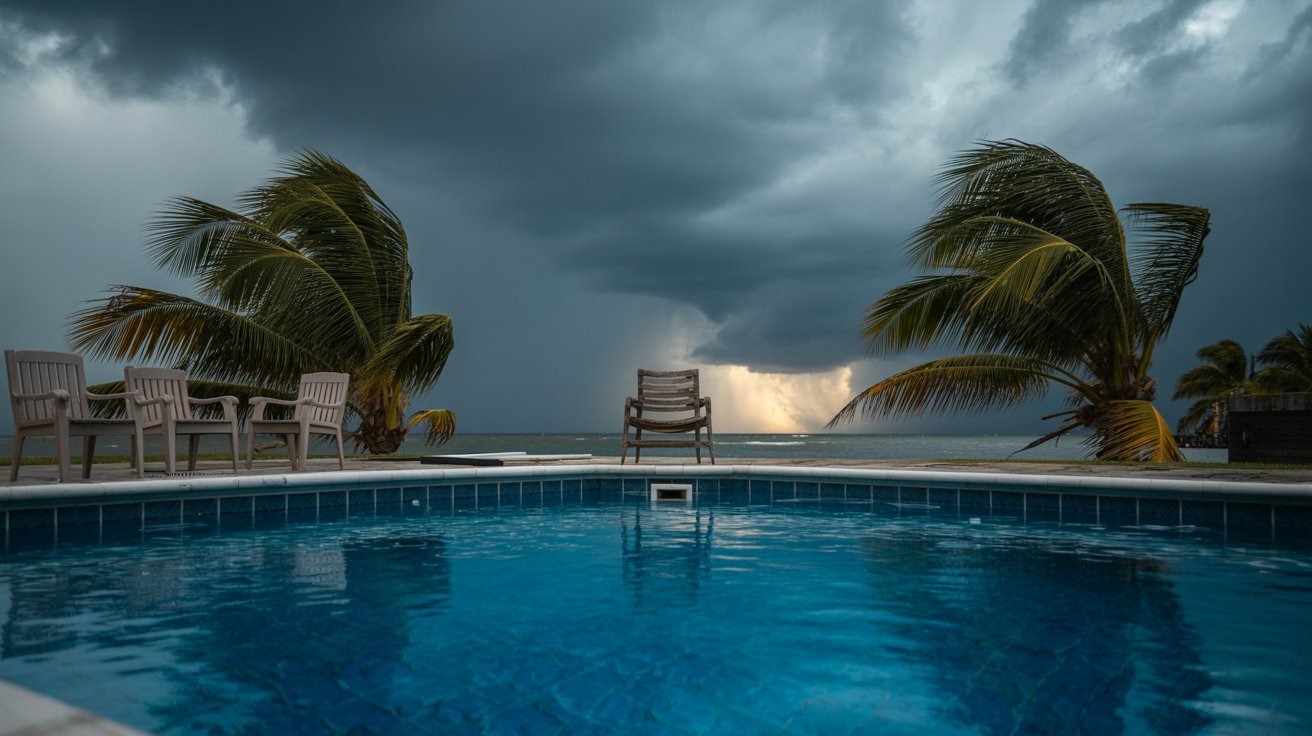
A summer storm or a heavy downpour is a common occurrence, often providing a welcome relief from the heat. While the garden certainly appreciates the extra hydration, your swimming pool does not share the same enthusiasm. Many pool owners operate under the assumption that rainwater is pure and harmless—after all, it is just water falling from the sky. However, from a chemical and maintenance perspective, rain is often the catalyst for a host of swimming pool problems.
Rainwater acts as a vehicle for atmospheric pollutants, and the physical act of a storm introduces physical debris that can overwhelm your filtration system. Understanding exactly how rain affects your pool is the first step in preventing the cloudy, green, or unbalanced water that often follows a storm. By anticipating these changes, you can take proactive measures to protect your investment and ensure the water remains safe for swimming.
The Alteration of Water Chemistry and pH Levels
The most immediate impact of rainfall is on your water chemistry. As rain falls through the atmosphere, it collects dust, pollen, pollutants, and spores. More importantly, rainwater generally has a lower pH than your pool water. While pool water should ideally sit between 7.4 and 7.6, rain is naturally acidic, often registering a pH of 5.0 to 5.5 due to the absorption of carbon dioxide and industrial emissions.
When a significant volume of acidic rain enters your pool, it lowers the overall pH of the vessel. Acidic water is aggressive; it can cause stinging eyes for swimmers and, over time, can etch plaster surfaces or corrode metal equipment components like heater cores and ladders. Additionally, the Total Alkalinity—which acts as a buffer for the pH—can plummet. When alkalinity drops, your water becomes unstable, leading to rapid pH fluctuations that are difficult to control.
Dilution of Sanitiser and Stabiliser
Beyond acidity, the sheer volume of water introduced during a storm dilutes the chemicals you have carefully balanced. If two inches of rain fall into your pool, that is a substantial amount of fresh, untreated water mixing with your treated water. This dilution effect reduces the concentration of your sanitiser (chlorine or salt) and your stabiliser (cyanuric acid).
When chlorine levels drop below the recommended range of 1 to 3 parts per million (ppm), the water loses its ability to kill bacteria and oxidise organic matter. This leaves the pool vulnerable. The reduction in stabiliser is equally problematic because without enough cyanuric acid, the sun’s ultraviolet rays will burn off whatever chlorine remains at a much faster rate. This combination often leads to a “chlorine demand” situation where you find yourself adding bucket loads of sanitiser with little result.
The Introduction of Organic Contaminants and Algae
Rain does not travel alone. It brings wind and runoff with it. Heavy rainfall washes dirt, mulch, fertiliser, and soil from the surrounding landscape into the pool. This runoff is particularly dangerous because it is often loaded with nitrates and phosphates.
Phosphates and nitrates are essentially superfoods for algae. When you combine low chlorine levels (due to dilution) with a buffet of nutrients (from runoff), you create the perfect environment for an algae bloom. This is why pools often turn green practically overnight after a storm. The rain delivers the algae spores from the air and then provides the food source they need to thrive.
Furthermore, physical debris like leaves and twigs consume your chlorine as they decay. As this organic matter breaks down, it releases tannins that can stain the pool floor and further mess with the water chemistry.
Debris Management and Filtration Stress
The physical impact of a storm is often visible on the surface. Leaves, insects, and pine needles are blown into the water, creating a mat of debris that can clog your skimmer basket in a matter of hours. If the skimmer basket becomes impacted, water flow to the pump is restricted. This can cause the pump to run dry or overheat, leading to expensive mechanical failures.
Removing this debris promptly is essential to prevent it from sinking. Once it sinks, it decays and becomes much harder to remove. Using a high-quality pool skimmer allows you to automate this defense. These devices patrol the surface, capturing the leaves and bugs brought in by the storm before they can waterlog and settle on the floor. This not only protects your water chemistry but also prevents your main filtration system from becoming overwhelmed.
Water Level Fluctuations and Skimmer Function
Heavy rain can raise the water level of your pool significantly in a short period. While free water sounds nice, too much of it prevents your skimmer from working correctly. Your skimmer needs to be about halfway submerged to create the surface tension required to pull debris into the basket.
If the water level rises above the skimmer opening, the skimming action stops completely. Debris will simply float on the surface without being drawn into the filter. Conversely, if the pool overflows, it can flood the area surrounding the pool shell. For vinyl or fibreglass pools, high groundwater pressure from saturated soil can cause the liner to float or the shell to bulge. It is crucial to monitor water levels during a storm and drain excess water to the waste line if necessary to keep the level optimal.
Sediment Buildup on the Pool Floor
Even if you manage the surface debris, fine silt and mud often settle on the bottom of the pool after a rain event. This sediment is too heavy for the main drain to pull in effectively and can make the water look hazy or dull.
Leaving this dirt on the floor promotes algae growth in the porous surfaces of the pool. It requires physical removal. While manual vacuuming is an option, it is labour-intensive. Utilising a robotic pool cleaner is the most efficient way to handle post-storm cleanup. These units are designed to scrub the floor and walls, vacuuming up the fine silt and trapping it in an internal canister. This ensures that the dirt is removed from the pool environment entirely rather than just being stirred up into the water column.
Steps to Take After a Rainstorm
Recovery is all about speed. The sooner you address the effects of the rain, the less likely you are to face a green pool.
First, restore the water level. If the pool is overflowing, use your waste valve or a submersible pump to lower the water to the middle of the tile line or skimmer mouth.
Second, clean the debris. Empty all skimmer and pump baskets immediately to restore proper flow. Remove large debris from the surface and floor.
Third, test and balance. Check the pH and alkalinity first. If the pH is low, aerate the water or use sodium carbonate to bring it up. Once the pH is balanced, test the chlorine. It is almost always necessary to shock the pool after a heavy rain to oxidise the contaminants and kill any algae spores introduced by the wind.
Finally, run the pump. Keep the filtration system running for 12 to 24 hours to filter out the fine particulate matter. This circulation is vital to mixing the chemicals and clearing the turbidity caused by the rain.
Conclusion
Rain is an unavoidable part of pool ownership, but its effects do not have to be disastrous. By understanding that rainwater brings acidity, dilution, and nutrients for algae, you can predict the needs of your pool. Staying on top of the physical cleaning and promptly rebalancing the chemistry ensures that a stormy night does not turn into a weeks-long battle with green water.